Teaching
I teach courses in business-to-business marketing, sales strategy, and business development at the undergraduate and MBA levels. My teaching philosophy is centered on preparing students to succeed in the job market and operate effectively in real organizational settings.
Drawing on over 15 years of industry experience as a software engineer and program manager, I design courses that emphasize strategic thinking, professional communication, and practical decision making. Students learn how to articulate value, navigate organizational dynamics, and apply marketing concepts in ways that reflect the realities of professional roles.
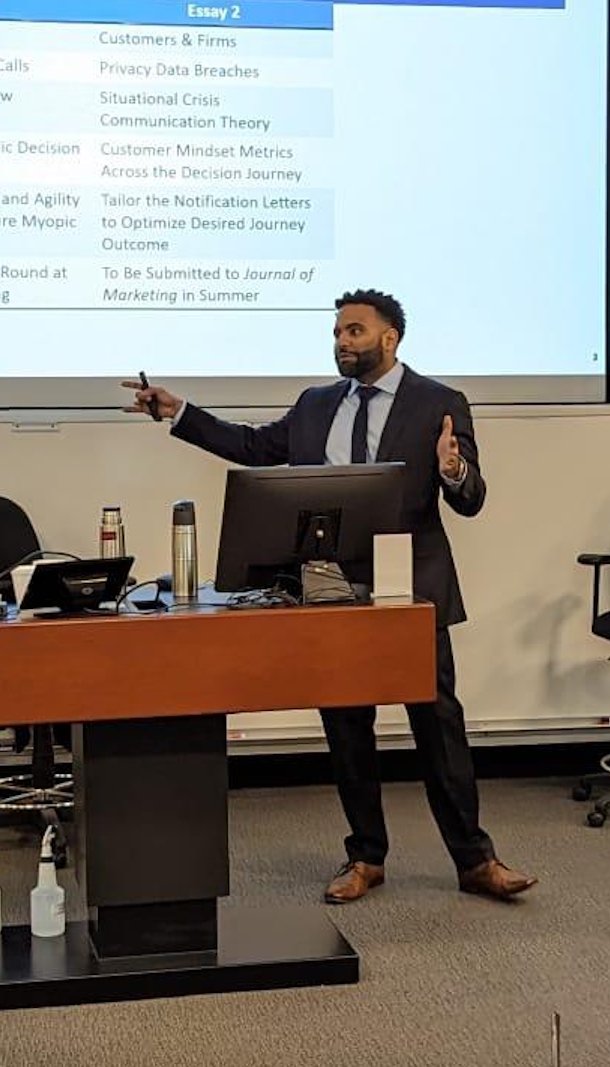
Courses Taught
Business Development Strategy (MBA)
Focuses on how firms identify, develop, and execute growth opportunities in complex organizations. Core topics include value proposition development, market concentration, pricing, negotiation, and stakeholder alignment. Courses are structured around case discussions and peer-to-peer negotiation exercises, allowing students to practice strategic thinking, value creation, and bargaining in controlled but realistic managerial settings.
Business Marketing and Sales (Undergraduate)
Introduces students to selling and marketing in business markets, with emphasis on value creation, relationship building, and professional communication. In addition to case discussions, students participate in a real-world negotiation exercise in which they leave the classroom to engage external parties, applying concepts related to value propositions, market structure, and negotiation strategy in live settings.
Artificial Intelligence in the Classroom
While artificial intelligence is not the central focus of my courses, I believe it is essential for students to understand what AI is, how it is used in organizations, and the ethical considerations surrounding its adoption before entering the workforce.
Accordingly, my courses include structured discussions on AI fundamentals, ethical use, bias, privacy, and managerial responsibility. Students are also introduced to prompt engineering concepts through a practical assignment designed to help them understand how AI tools can support research, communication, and decision making. The goal is not technical mastery, but AI literacy and responsible use in professional settings.
Executive Engagement and Professional Skills Development
My courses regularly feature industry executives, including founders and senior leaders from global organizations, such as Nike, who share firsthand perspectives on career paths, leadership, and decision making.
In addition, guest speakers lead workshops on personal branding and professional communication, helping students develop skills in executive presence, messaging, and stakeholder engagement, capabilities that are critical for success in client-facing and leadership roles.
Teaching Philosophy
My teaching philosophy is guided by four principles:
Career readiness, courses are designed to prepare students for the realities of the job market and early-career roles
Learning by doing, students develop judgment through structured practice and live negotiation experiences
Responsible technology use, students gain AI literacy to navigate emerging tools thoughtfully and ethically
Communication and professionalism, clear thinking and clear communication are treated as core managerial skills
Across courses, I rely on case discussions, experiential negotiation exercises, executive engagement, and professional skills development to help students transition successfully from the classroom to the workplace.